
Stupid Simple Box Joints
How to Make Simple Box Joints
Woodworking joinery doesn’t have to be complicated. For example, you can make beautiful box joints without measuring your workpieces.
I’ve used this technique on multiple projects. In the video above, I use them to make a box with a hinged lid, but I also used them on a sliding lid box, which shows the joint’s versatility.
Woodworking Joinery without Measuring?

One time, a woodworker messaged me enraged at the thought of not measuring a workpiece. His main focus was that if you don’t measure the board then you don’t care about quality work. Here’s the big secret…measuring does not equal quality. They are two separate things. One is scientific and the other is subjective.
Stupid simple box joints only require “relative positioning,” meaning that you don’t make your cuts based on measuring. Instead, you can use one workpiece to align and cut the others. If the pieces fit perfectly together and someone loves how the project turned out, it can be subjectively considered a “quality” project. You can do that without measuring. Here’s how it works:
I set my sawblade to the same thickness as my workpiece. Then, I cut a notch out of the center on each end. There’s no need to measure in order to find the center. I put my workpiece against a stop block and made the first cut. I rotated the board and put the opposite edge against the stop block, and made the second cut. That resulted in two perfectly symmetrical cuts. All I had to do after that was cut away the material in the middle. The width of the notch is completely subjective. Make it any size that you want.
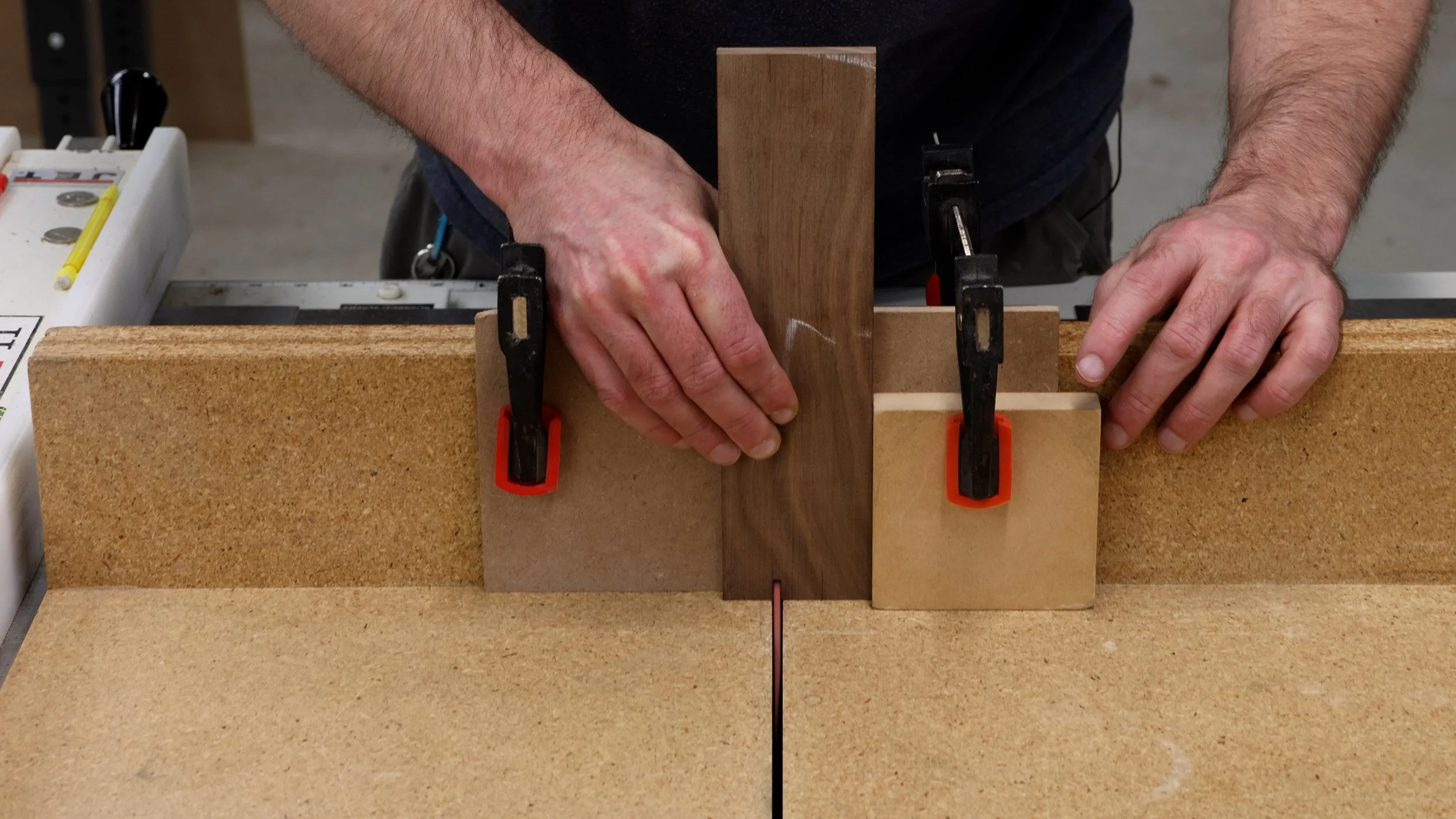
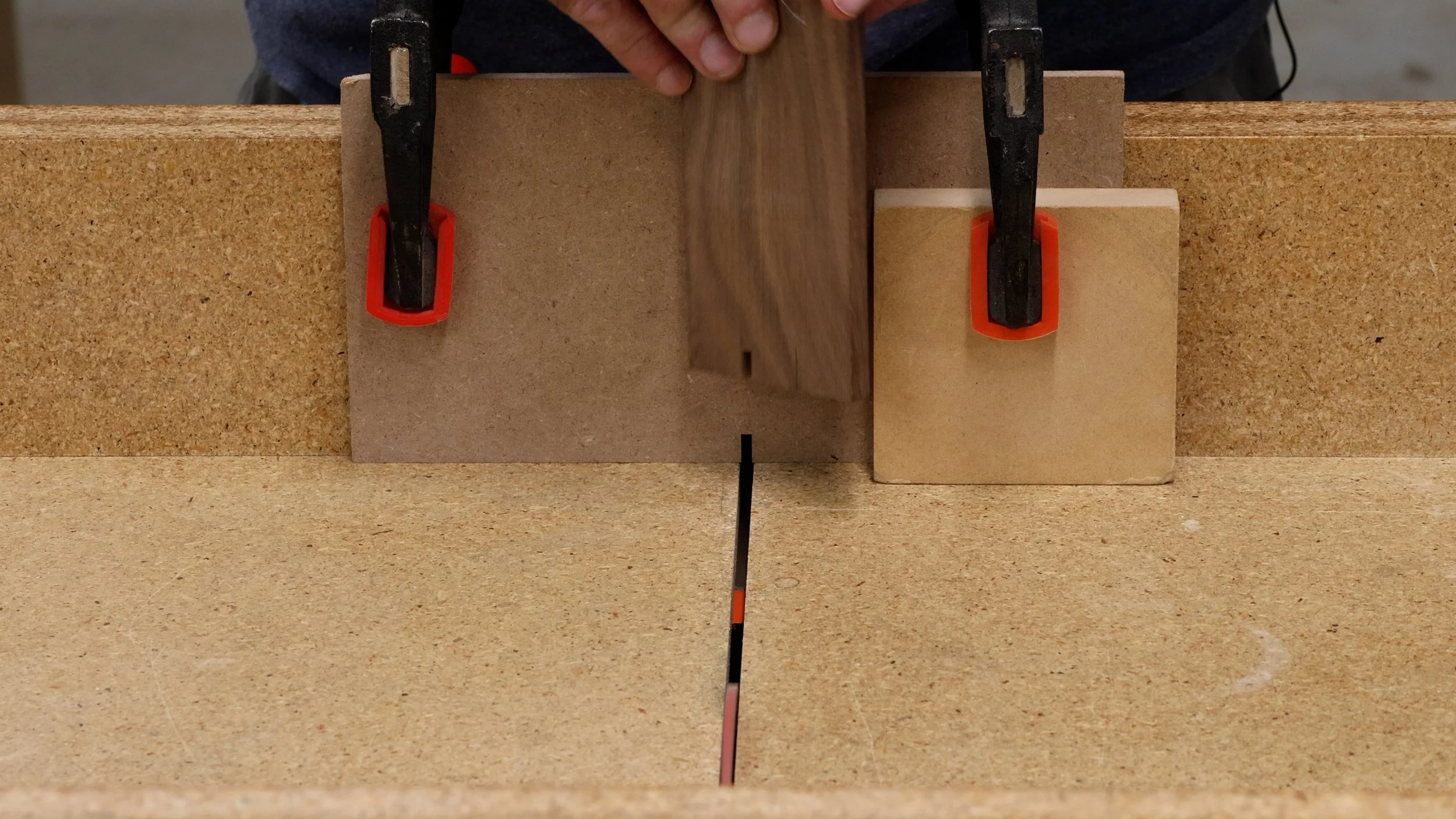
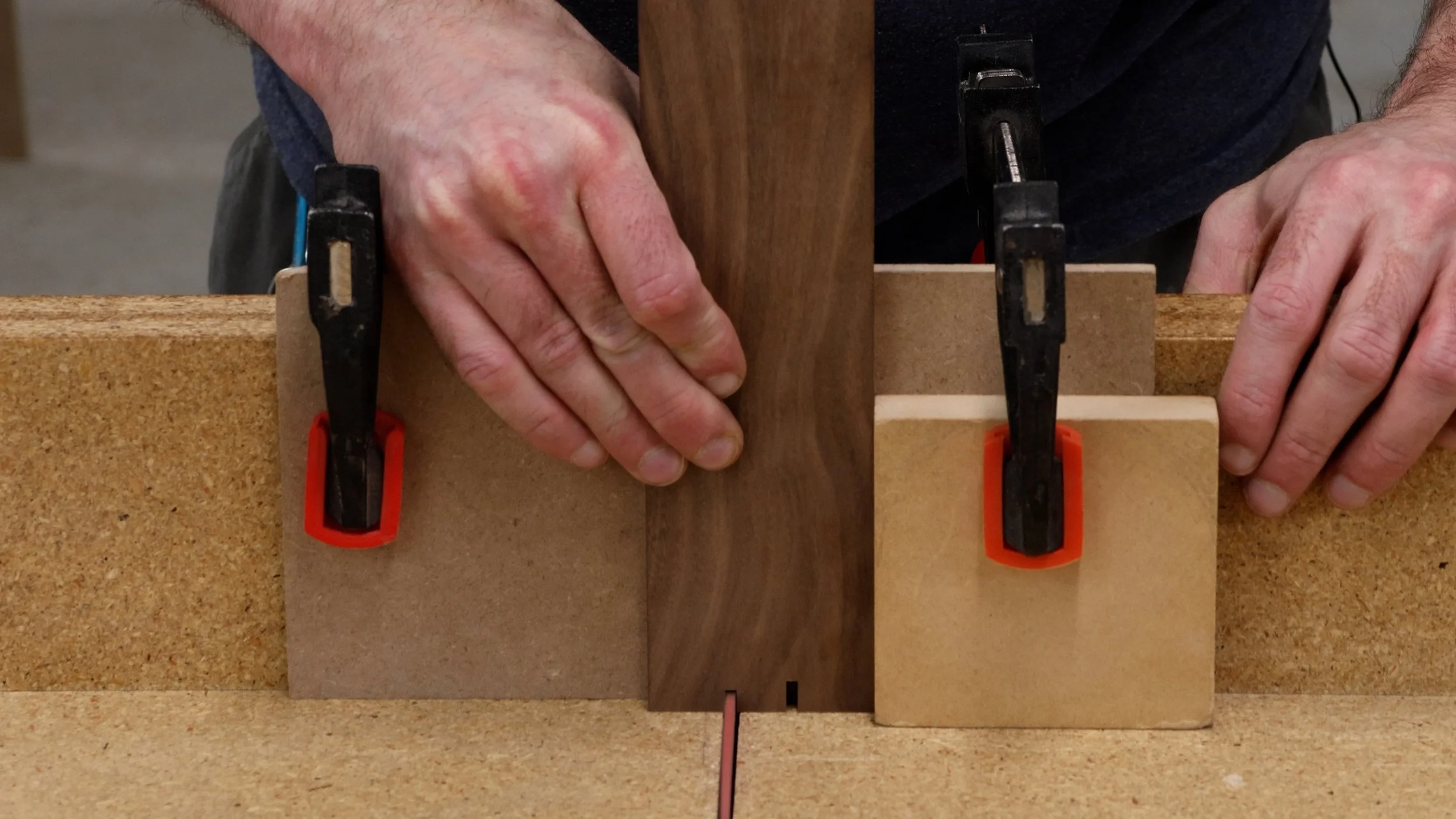
Cutting the mating boards was just as easy. I aligned the boards and transcribed the notch locations. At the table saw, I cut my workpiece starting at each end and working my way to the center. When I got close to my line, I set up a stop block and cut the board just outside of it. I rotated the board, and cut the other side. This results in a perfectly centered tenon that matches the notch in the other workpiece.
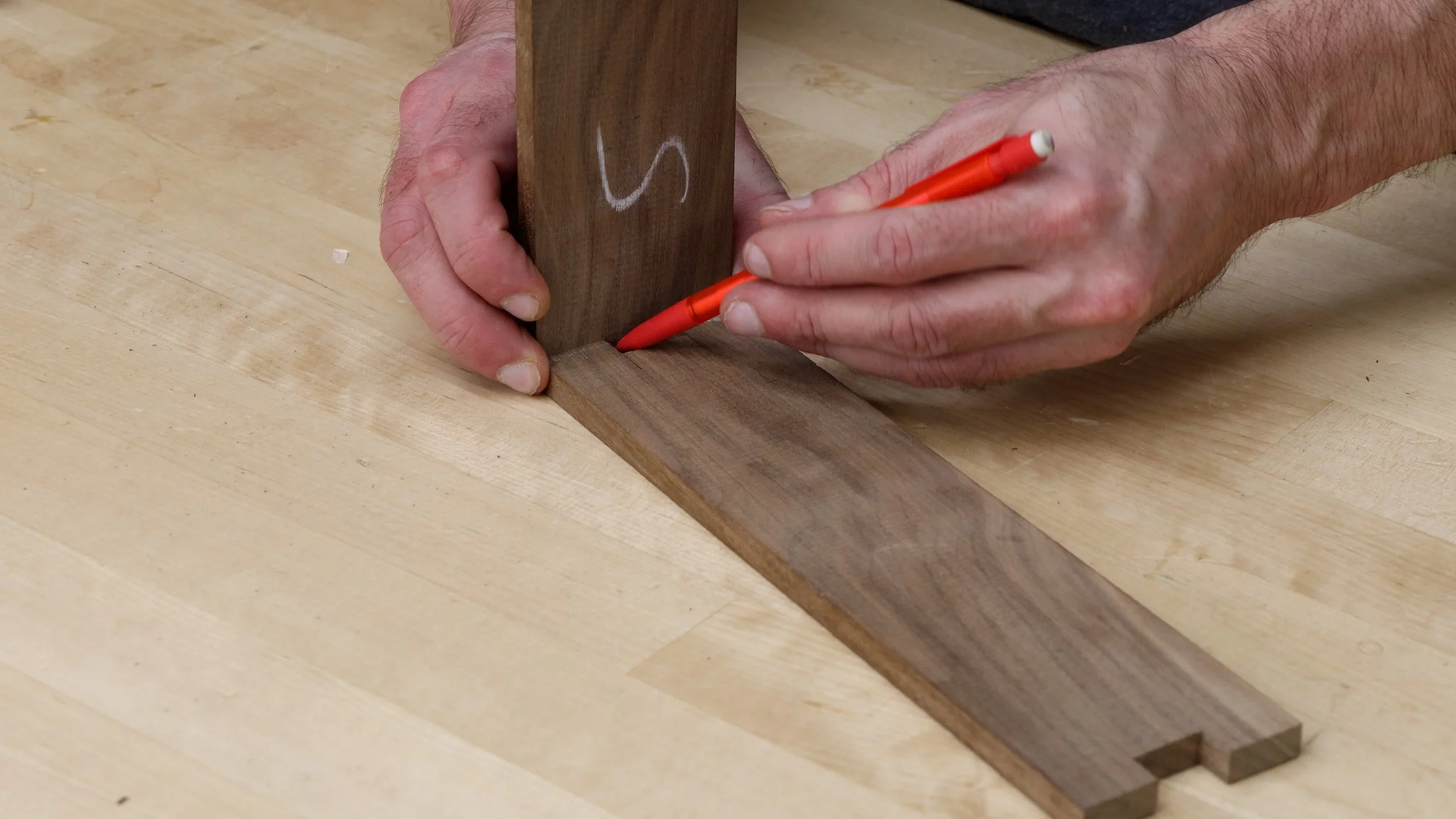
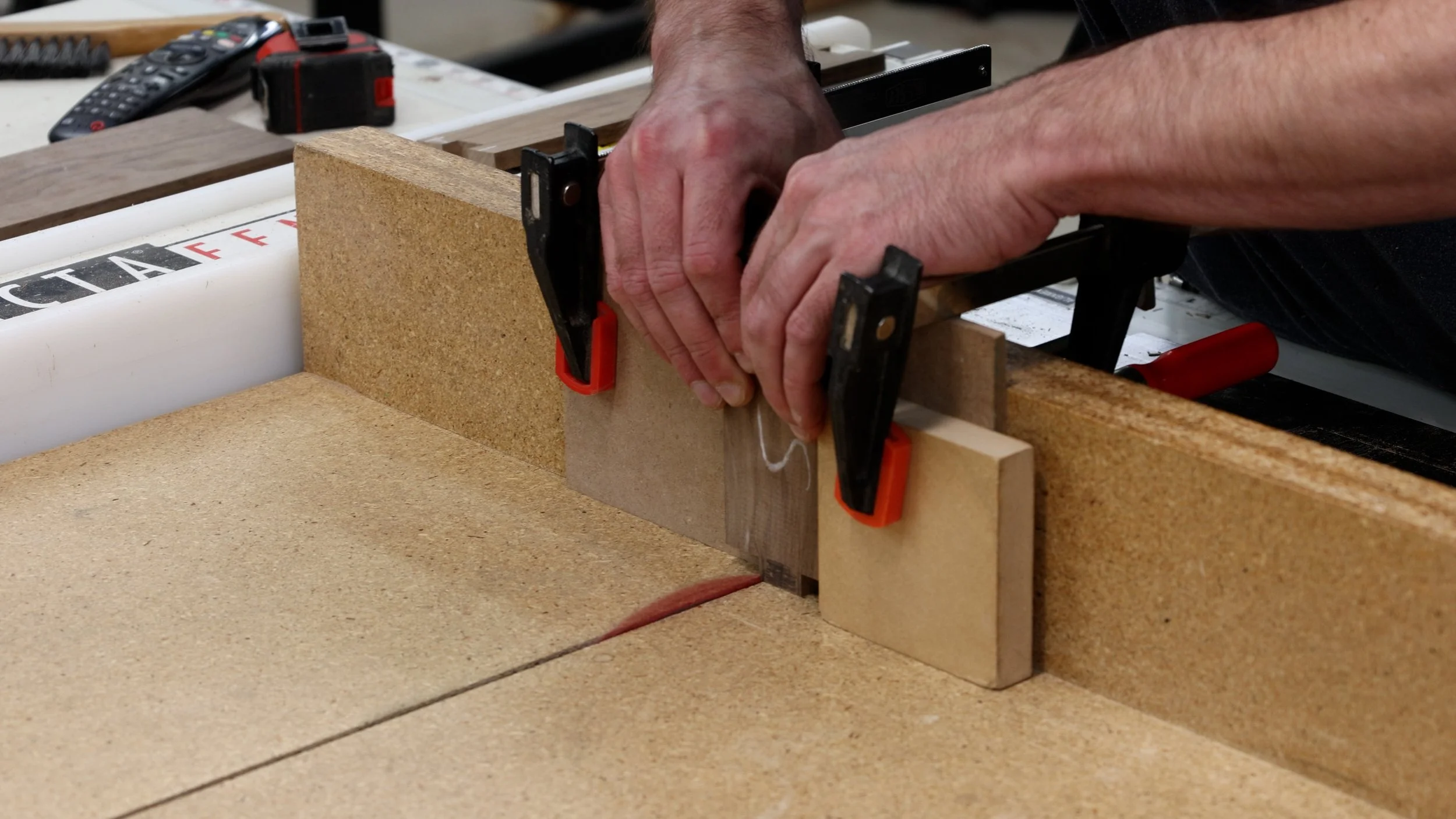
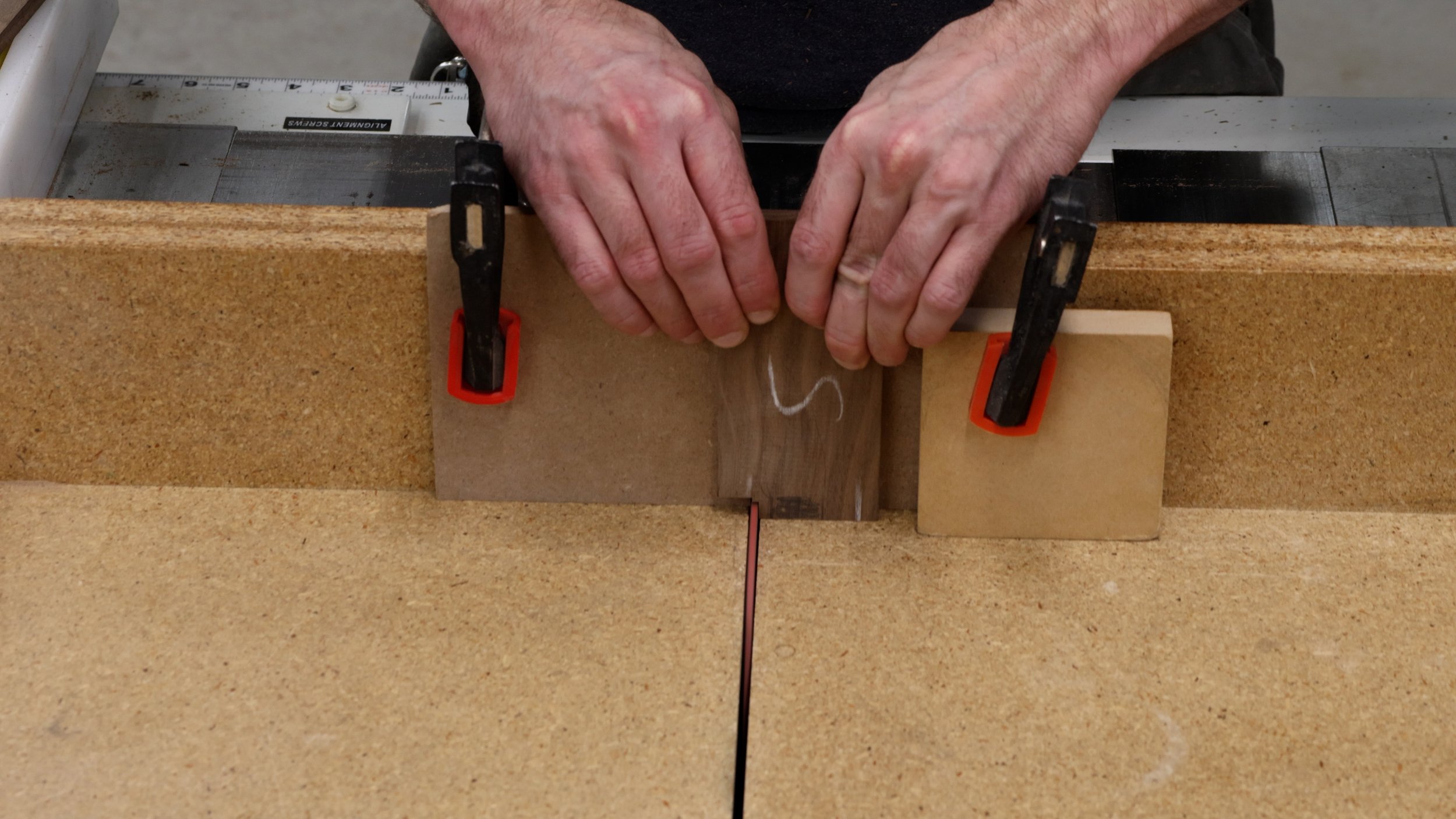
I’m conservative when it comes box joints. I like to test fit my joint to make sure it fits together snuggly. If it doesn’t fit, I’ll move my stop block just a hair closer to the blade and cut the board again (always rotating the board). I’ll test fit the joint again. Rinse and repeat, until the joint fits perfectly.
To me, measuring the workpieces provides no extra value or quality control. At the beginning of the process, I can measure the thickness of my workpiece and then use my ruler to set the saw blade height. This can add more error into the process. Why transfer the thickness to a ruler, and then use the ruler to set the blade when I can just use the workpiece to set the blade height?
The same thought goes into the notches and tenons. For example, I can set my combination square and draw perfectly measured layout lines for the box tenon that fits into the notch. Ultimately, I will still end up cutting at a line, whether it’s a line from by square or transcribed from the other workpiece.
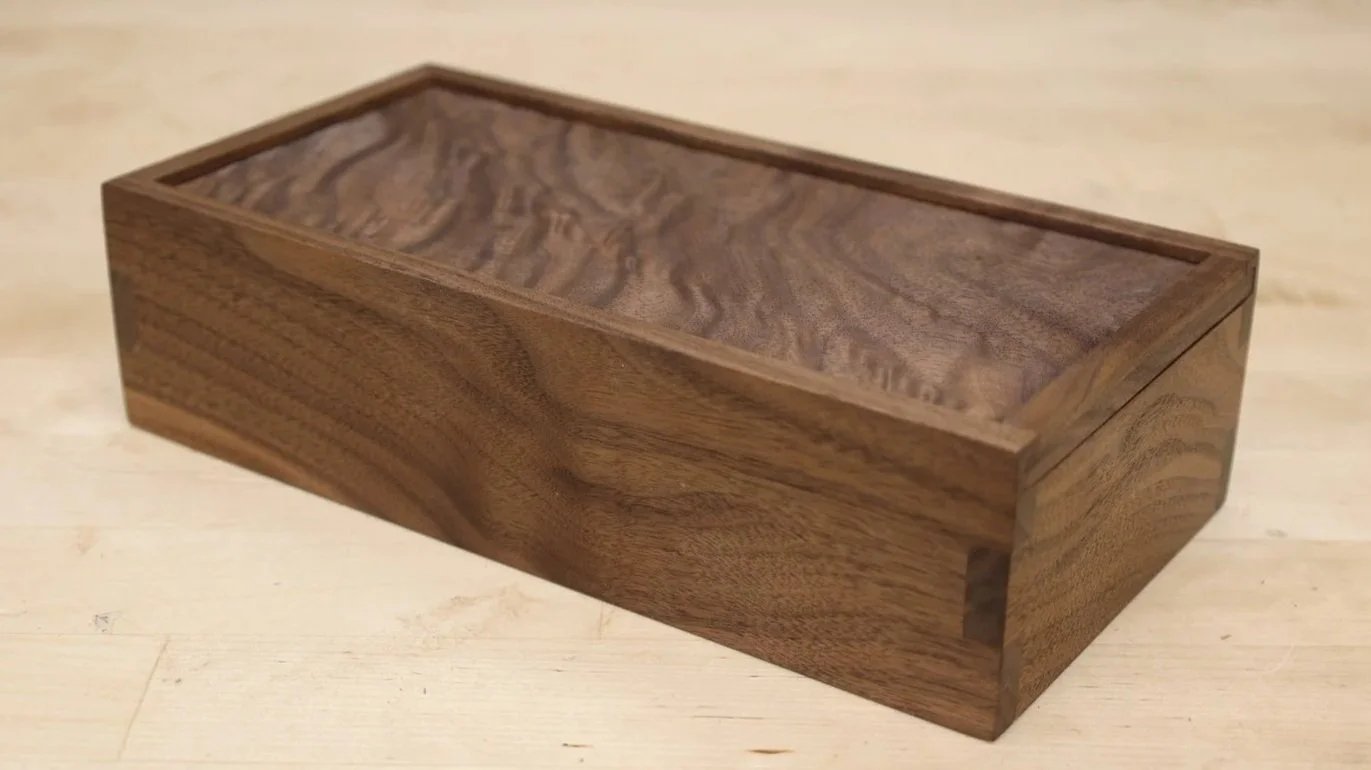
Sometimes, we can keep things simple and still get great results.
